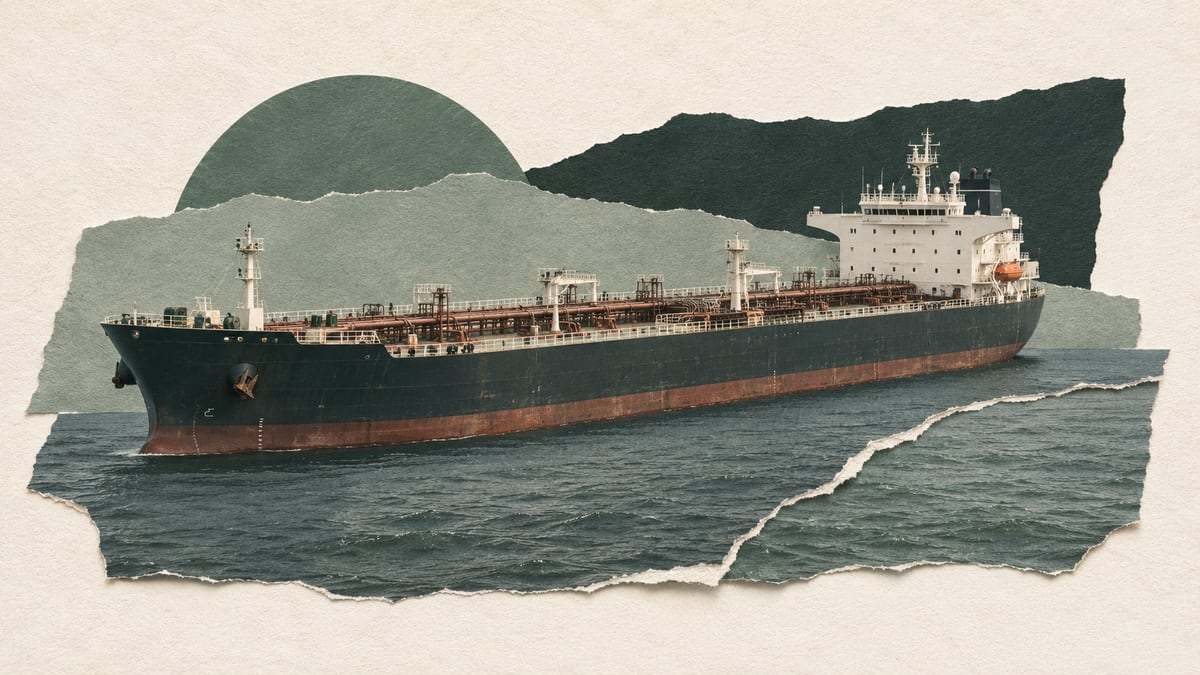
Argentina's foreign minister writes that sovereignty over the Malvinas Islands, known in English as the Falkland Islands, is a national cause, and that the Constitution requires Argentina to defend it. Britain's Rockhopper Exploration and Israel's Navitas Petroleum plan to extract oil from the North Malvinas Basin through the Sea Lion project. They hold licences issued under the United Kingdom's de facto authority, which Argentina considers illegal and illegitimate.
Argentina has repeatedly protested the activities. Company announcements, contracts and a drilling schedule have brought closer a project calling for 23 wells and 35 years of production. The minister says oil under what Argentina regards as its continental shelf, once extracted, is gone forever, and that the reserves belong to all Argentines.
In a nationwide address on 3 September, President Javier Milei announced a strategy to defend Argentina's rights and instructed officials to use every diplomatic and legal tool available. The stated goal remains the full exercise of sovereignty over the Malvinas, South Georgia and the South Sandwich Islands and the surrounding waters.
The request to the International Tribunal for the Law of the Sea has a specific aim: provisional measures to halt oil production under Sea Lion before it begins. The minister says Argentina is grateful for broad international support, that repeated unilateral British actions have aggravated the dispute, and that the United Kingdom continues to refuse to negotiate. The international community, the minister writes, has called for negotiations and a peaceful settlement that respects sovereign rights and protects natural resources.
That position has been expressed by the UN General Assembly and its Special Committee on Decolonization, the C-24, as well as the Organization of American States, Mercosur, the Community of Latin American and Caribbean States, the Latin American Integration Association, and the Group of 77 and China. At the Ibero-American Summit in Madrid on 4 and 5 November, participants again called for negotiations and urged both countries to refrain from unilateral action. As the project advances, the minister says the risk of irreversible harm led Argentina to pursue legal remedies alongside diplomacy.
The Foreign Ministry began the proceedings as part of a strategy also pursued in talks with individual countries and in international forums. Preparing the case took months. The legal team included Ambassador Mario Oyarzábal, the ministry's legal adviser, and María Ibarzabal Murphy, legal and technical secretary to the presidency. Deputy Treasury Attorney General Santiago Castro Videla represented that office. Juan Ignacio Stampalija, the Economy Ministry's legal secretary, and legal experts Marcelo Kohen, Nico Schrijver and Agustín Giustiniani also served.
On 28 September Argentina initiated arbitration against the United Kingdom. Both states are parties to the UN Convention on the Law of the Sea and have accepted its dispute procedures. Annex VII provides for a tribunal of five independent arbitrators whose decision would bind both parties. Argentina chose arbitration to require the United Kingdom to meet its obligations on natural resources in the disputed waters and to refrain from unilateral changes there.
If work continues while that tribunal is being formed, the convention allows either party to ask the International Tribunal for the Law of the Sea, in Hamburg, for provisional measures to prevent irreparable harm. Argentina did so on 13 October, after the United Kingdom declined the measures Argentina had requested. Once the arbitral tribunal can act, it may confirm, modify or revoke any measures ordered in Hamburg.
At hearings on 10 and 11 November, Argentina explained which rights were at risk, why the tribunal could protect them, and what harm might be irreversible before the arbitrators could intervene. The United Kingdom challenged jurisdiction, arguing that the case would require a decision on who holds sovereignty over the islands.
The minister says Argentina is asking what obligations the convention imposes in the disputed waters, and that sovereignty itself falls outside these proceedings. UN General Assembly resolutions 2065 (XX), 3160 (XXVIII), 31/49 and 37/9 call on both countries to negotiate a peaceful settlement. Argentina's position is that the convention allows protection of the resources while the dispute remains unresolved: it recognises rights over the seabed and subsoil and requires states to act in good faith, settle differences peacefully and protect the environment.
Resolution 31/49 also calls on both countries to refrain from unilateral changes while decolonisation is under way. The minister says the United Kingdom disregards that call, refuses to negotiate over sovereignty, and is pursuing what Argentina regards as unlawful exploitation as though the dispute were already settled in Britain's favour.
The British government argued that the islands' current inhabitants have a right to self-determination. Argentina's delegation disputed that. The Malvinas remain on the UN list of non-self-governing territories. Argentina argued that the General Assembly has determined that decolonisation requires the two countries to settle the sovereignty dispute, and that a referendum organised by the islanders in 2013 did not change that position.
The United Kingdom also argued there was time to wait. It gave 21 March 2027 as the earliest date for new drilling and March 2028 as the earliest date for oil extraction, and said the arbitrators could act before those operations began. Argentina pointed to other cases in which forming an arbitral tribunal and putting it in a position to act took months. The minister says drilling a well leaves a permanent mark on the subsoil even if production is still some way off, and that provisional measures would let the arbitrators hear the case while a later ruling could still protect what it could no longer restore.
The risk, the minister writes, extends to the marine environment. One company's own contingency plan says a spill from a well could reach Argentine waters outside the disputed area within 30 days. Argentina would have to deal with the consequences and coordinate the response to an operation it had never authorised, which is why it demanded the information and cooperation needed to protect the marine environment.
The United Kingdom argued that the companies would suffer financial losses and the islanders would lose future income. Argentina says the companies assumed those risks knowing of the dispute and of Argentina's protests, and that the islanders' public services and current living conditions do not depend on Sea Lion production. Argentina asked the judges to weigh those economic interests, insofar as they are relevant, against the risk of irreparable harm to Argentina's rights.
Argentina requested four provisional measures. First, that the United Kingdom take all necessary steps to prevent further drilling for production or the installation of production infrastructure for Sea Lion in the North Malvinas Basin, covering work by the United Kingdom and by any person or legal entity under its jurisdiction or control. Second, that it refrain from using information gathered during exploration in the disputed waters to the detriment of Argentina's rights. Third, that it stop obstructing Argentina's efforts to meet its obligations to protect and preserve the marine environment there. Fourth, that it refrain from any other action that might aggravate the dispute, particularly new authorisations to exploit resources on the disputed continental shelf.
The tribunal has set 28 November for its decision on the request for urgent protection. The minister hopes for a favourable ruling, while respecting the judges' independence, and says that whatever they decide, the arbitration is already under way and Argentina will continue every legal and diplomatic avenue.
In the meantime, the minister says Argentina will keep warning companies and governments, pursue sanctions, and bring criminal proceedings against the companies and their executives. Congress should give priority to the National Sovereignty Defense Bill and move swiftly to debate and pass it, so as to strengthen the government's ability to defend the rights of all Argentines. Respect for Argentine law and legitimate authorities, the minister adds, also underpins an invitation to invest in mainland Argentina, where the growing value of strategic assets offers opportunities under clear and predictable rules.
The minister says this is the first time in the history of the Malvinas dispute that Argentina has faced the United Kingdom directly before an international tribunal, and that Argentina will act to prevent others from appropriating its natural resources. The minister contrasts Argentina's stated respect for the law and willingness to negotiate with those who would settle the issue unilaterally, and describes that approach as President Milei's instruction.
The minister thanks the legal team that represented Argentina in Hamburg on 10 and 11 November, and says Argentina will pursue this defence through every avenue the law provides. The article states the minister's position that, by history and by law, the Malvinas belong to Argentina.
The writer is Argentina's foreign minister. The article appeared in Spanish in La Nación on 14 November 2026. The English translation is dated 17 November 2026.