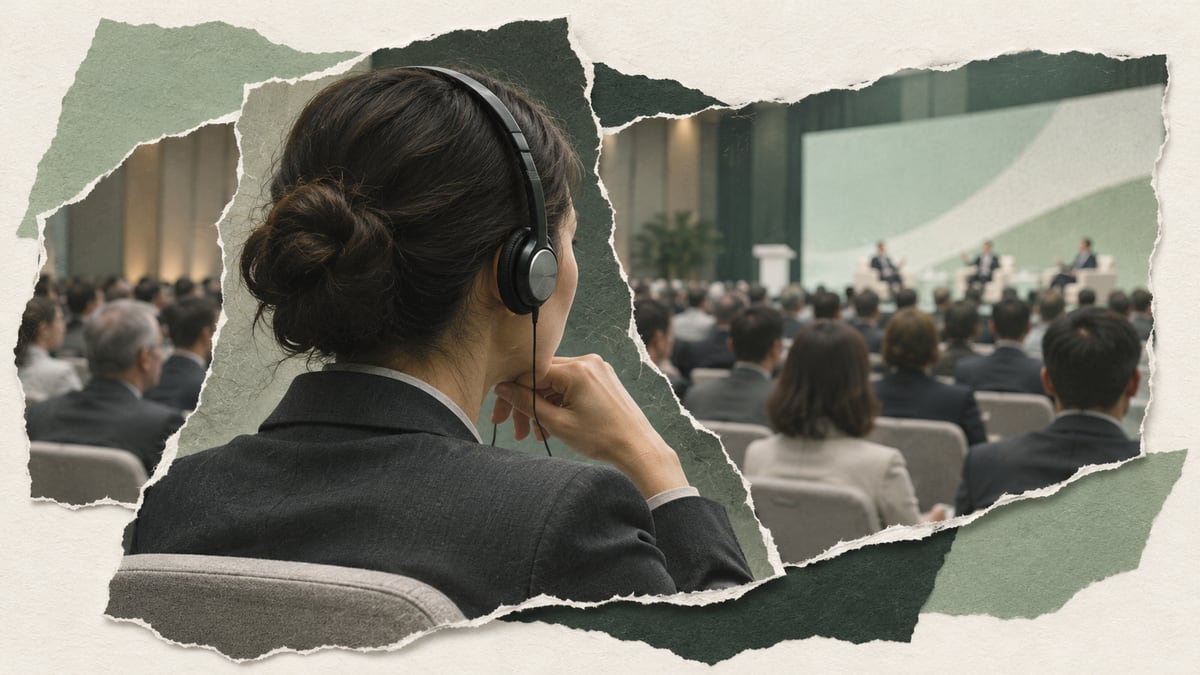
The second Bharat Summit was held on 13 and 14 November at the Hyderabad International Convention Centre. Convened by the Telangana government and curated by the Samruddha Bharat Foundation, it brought together more than 1,000 delegates from over 70 countries under the theme “Forging a New World”. Senior Congress leader Salman Khurshid said deliberations across 12 international sessions, eight Telangana sessions and the launch of a policy think tank named Our World would showcase Rahul Gandhi’s vision for India and the world. Party leaders framed the meeting around global justice, electoral integrity and social equality. The guest list then became the centre of a political dispute.
Among those invited was Sir Iqbal Sacranie, founding secretary-general of the Muslim Council of Britain. During the India-Pakistan military standoff, an MCB statement dated 27 May 2002 demanded a “free and impartial plebiscite” in Jammu and Kashmir. In an earlier MCB statement dated 14 April 2000, Sacranie said: “The British Muslim community is appalled at the continuing killing, rape, arson and destruction in Kashmir by 700,000 Indian forces.”
On 14 November, Giacomo Filibeck, secretary general of the Party of European Socialists, addressed the Hyderabad audience and chanted “Vote Chor, Gaddi Chhod”, a slogan Rahul Gandhi has used in election rallies to question India’s Election Commission, electronic voting machines and the mandate of the BJP-led government. Gandhi smiled and applauded. Filibeck said: “The Congress Party built the democratic foundation of modern India. Today, it is fighting to protect them. And progressives everywhere stand with you.”
Other invited figures included former Jakarta governor Anies Baswedan, whose 2024 presidential campaign received the backing of Abu Bakar Bashir, the cleric linked to al-Qaeda who inspired the 2002 Bali bombings that killed 202 people. Bashir was convicted in 2011 of funding a militant training camp in Aceh, publicly pledged allegiance to Islamic State in 2014 while serving a 15-year sentence, and was released in January 2021. Former Ecuadorian foreign minister Guillaume Long, a senior research fellow at the Centre for Economic and Policy Research, was also invited. BJP national media convenor Ashish Usha Agarwal said CEPR received $420,000 in grants in 2021 from the Open Society Policy Centre and asked whether Congress was seeking international backing against India’s democratic mandate. He noted that in March 2025 the Directorate of Enforcement searched eight locations in Bengaluru linked to the Open Society Foundations and local beneficiaries over suspected Foreign Exchange Management Act violations. BJP spokesperson Pradeep Bhandari said speakers included people with links to George Soros-backed networks. Patrick Gaspard, president of the Open Society Foundations from 2017 to 2020, spoke at the closing session on 14 November. Malaysian politician Nurul Izzah Anwar, executive chair of the Suluh Centre and a former MP, was also hosted; she spoke at an Open Society Foundations-sponsored event in 2025.
The summit is tied to the Progressive Alliance, a network of left and socialist parties founded in Leipzig in 2013. It brings together 119 parties from 97 countries, including the UK Labour Party, Germany’s Social Democrats, and India’s Congress and Samajwadi Party. Its stated mission is to share campaign strategies and organise against what it calls right-wing populism and authoritarianism. Rahul Gandhi is one of nine members of the alliance praesidium for Asia, with Congress figures Sam Pitroda and Jothimani Sennimalai on its board. In December 2025 he skipped the final day of Parliament’s Winter Session for an alliance meeting in Berlin. He also attended an alliance meeting in Santiago on 5 and 6 October 2024. In April 2025, Congress and the alliance jointly held “Delivering Global Justice” in Hyderabad, ending with a declaration that accused far-right leaders and autocratic governments of spreading lies.
Domestic invitees named in the dispute included Salil Shetty, a former Amnesty International secretary-general and former Open Society Foundations vice-president, who walked with Gandhi on the Bharat Jodo Yatra in Harthikote, Karnataka, joined 2020 protests against the Citizenship Amendment Act and, when the law was notified, wrote: “We will never allow #India to be divided by the Hindutva fundamentalists. We will unmask them.” Academic Kancha Ilaiah Shepherd told Rediff on 17 January 2000: “Yes, I hate Hinduism, Hinduism is not ours, it is against us.” Satavahana University principal Sujatha Surepally posted on Facebook on 7 May mocking the name of Operation Sindoor after the Pahalgam attack, in which the report says Pakistani terrorists killed 26 civilians after identifying them as Hindus, and later deleted the post. Delhi University professor Apoorvanand was named in a Delhi Police chargesheet by accused Gulfisha Fatima and a protected witness identified as GAMA in connection with the February 2020 riots, which killed 53 people. Economist Jayati Ghosh was named in a disclosure statement in that probe but was not chargesheeted; she has received Open Society Foundations research support, including a 2018–2019 project on formalising the informal sector.